What Is the Best Way to Trade Meme Coins for Beginners Using a Copy-Trading App and Why
Want articles like this for your own video to promote it on YouTube and Google? Order them through the Telegram bot @sat_sit_bot. The bot writes and publishes the articles itself (with your YouTube video embedded) on popular topical websites (no ads). Try it free: 50 articles on us.
· based on the channel Orangie Web3
Key takeaways
- Meme coins are tokens whose price is driven almost entirely by attention, liquidity and narrative rather than cash flow or fundamentals.
- Copy-trading platforms such as Fomo let a user mirror another wallet's buys and sells instead of researching every new launch manually.
- The main structural risk is that large traders often buy on a separate wallet first, so copy-traders enter at a worse price.
- Most beginner losses come from position sizing and slow exits, not from picking the wrong coin.
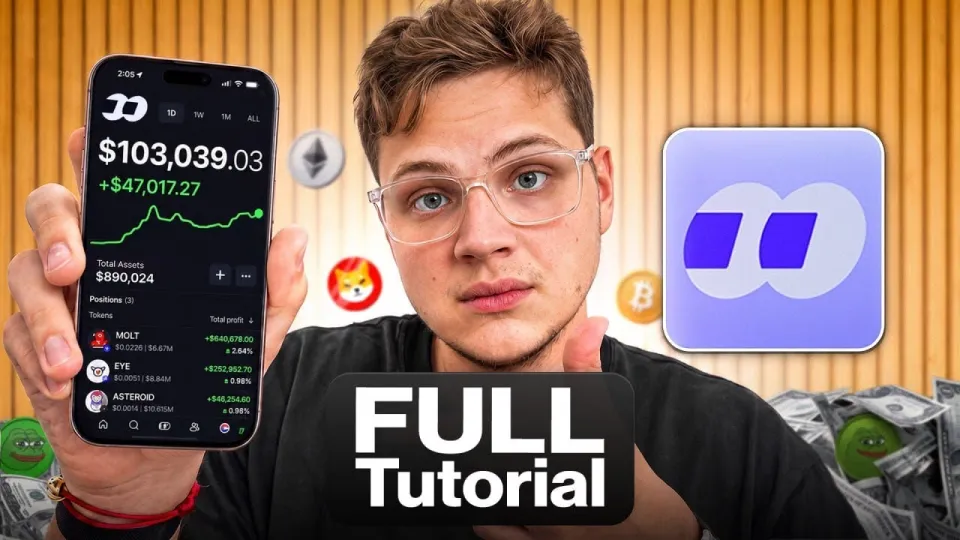
- Orangie Web3 walks through the Fomo app step by step and stresses that memecoins are high-risk, fast-moving instruments.
Meme coin trading is best approached as a fast, high-risk game of attention and liquidity rather than investing, and the most practical entry point for a beginner is a copy-trading app that mirrors an experienced wallet while you keep strict position sizing and a pre-set exit plan. Tools like Fomo, which you can try through the Fomo registration link, automate the mechanical part of buying and selling so a newcomer can focus on risk control. The rest of this guide explains how that workflow actually functions, where it breaks, and what to check before you deposit anything.
Why meme coins behave differently from other crypto assets
A meme coin has no revenue, no product and usually no treasury worth modelling, so its price is set by the flow of new buyers against available liquidity. That means three things matter far more than any chart pattern: how many people are talking about the token, how deep the liquidity pool is, and how concentrated the holdings are among early wallets. A token with a thin pool can move 40% on a single mid-sized sell, which is why the same strategy that works on a large-cap coin will destroy an account on a fresh Solana launch.
This is also why the memecoin sector produces such extreme outcomes. A coin can go from a few thousand dollars of liquidity to a multi-million dollar valuation in hours, and back to near zero just as quickly once the narrative fades or the first large holder exits. Treating that as an investment thesis rather than a trade is the single most common beginner mistake.
How a copy-trading app like Fomo works
Copy trading removes the execution problem: instead of finding a contract address, checking the pool and manually swapping, you follow a wallet and let the platform replicate its trades in your account. In the Fomo walkthrough published by Orangie Web3, the flow is essentially a short onboarding sequence — connect a wallet, fund it, browse traders or a feed of recent activity, then choose who to mirror and how much capital to allocate. The appeal is speed: the gap between seeing a trade and being in it shrinks from minutes to seconds.
There is a trade-off baked into that convenience. You are trusting both the platform's execution and the judgement of whoever you copy, and you inherit their entry price rather than your own. Copy trading is a tool for execution and discovery, not a substitute for knowing what a stop looks like.
The copy-trading trap that experienced traders warn about
The most important structural problem with mirroring wallets is that the wallet you follow is rarely the trader's first move. A large trader can accumulate a position on a separate, unlisted wallet, then buy visibly on their main wallet to create the appearance of conviction and pull in followers whose buys push the price higher. By the time a copied order fills, the earlier accumulation is already in profit and the copy-trader is effectively providing the exit liquidity.
A few practical defences follow from that:
- Check whether the wallet's recent buys were preceded by inflows from another address, which suggests pre-positioning.
- Compare the fill price you receive with the price at the moment the trade was announced; a large gap means you are late.
- Prefer traders with a documented history of taking profits, not only of buying early.
- Never mirror a position size you would not have chosen yourself.
None of this makes copy trading useless, but it reframes it: you are not following a genius, you are following a flow of orders that you must still manage.
A risk framework that keeps beginners in the game
Survival in memecoins is a position-sizing problem before it is a picking problem. A workable framework for a small account looks like this: risk no more than 2–5% of your trading capital on any single token, assume any position can go to zero, and decide your exit before you enter. Because these tokens can halve in minutes, a stop-loss order is often filled far below the level you set, so sizing must assume slippage rather than rely on the stop.
Taking profit in tranches is the second habit that separates people who last from people who do not. Selling a portion at 2x, another at 5x and letting a small remainder run converts a volatile trade into a realised gain, which matters because most memecoins do not survive long enough for a second chance. Keep a written record of every trade, including the ones that failed, and review it weekly — the pattern of your own mistakes is more useful than any signal group.
Common questions beginners actually ask
New traders tend to raise the same handful of concerns, and they are worth answering directly. The first is about safety of funds: a copy-trading app is a front end, so your capital sits in a wallet you control, and the seed phrase for that wallet should never be entered anywhere except the wallet itself. The second is about being too late — a very common experience is entering a trade minutes after a large wallet and watching the price drift down, which is a signal to check pre-positioning rather than to double down.
The third recurring theme is recovery after a loss. Someone whose wallet was drained or who gave back early profits usually needs a smaller bankroll and a stricter rule set, not a bigger bet. The fourth is missing features: traders repeatedly ask for price alerts inside these apps, and until they exist, setting independent alerts on a charting tool or a wallet tracker is the practical workaround. Finally, newcomers often ask whether coaching or a community is worth it — a Discord or group is genuinely useful for asking basic questions, but it should never be the reason you skip your own due diligence.
Useful links
- Fomo trading platform and registration: https://fomo.family/r/orangie
- Orangie Web3 community Discord: https://discord.gg/memecoins
- Orangie Web3 on Instagram: https://www.instagram.com/orangieyt/
Final thoughts on trading meme coins
Meme coin trading can be learned, but it cannot be made safe, and the honest version of this strategy is small size, fast exits and a copy-trading tool used for execution rather than for conviction. The Fomo workflow shown by Orangie Web3 is a reasonable starting point precisely because it shortens the mechanical steps, leaving you free to focus on the parts that decide the outcome: how much you risk, when you sell, and whether the wallet you follow was already positioned before you arrived. Start with an amount you can lose entirely, register through the Fomo referral link, and treat every trade as a test of your process rather than a bet on a meme.
Source: How To Make Money Trading Memecoins (fomo app tutorial) · Markdown version
Questions & answers
Is copy trading meme coins profitable for beginners?
It can be, but the edge is small and inconsistent. Copy traders usually enter after the wallet they follow, so they get a worse price and absorb more of the downside. Profitability depends far more on position sizing and disciplined exits than on which wallet you mirror.
How much money should I start with when trading meme coins?
Only an amount you are willing to lose completely, because a large share of new tokens go to near zero. Many traders start with a small bankroll and risk 2–5% of it per trade, which keeps a run of losses from ending the experiment.
Why do I lose money when copying a trader who is clearly winning?
Large traders often buy on a separate wallet before buying on their public one, so followers buy into price that has already been pushed up. Checking for prior inflows and comparing your fill price with the announced price shows how late you really are.
Do copy-trading apps have price alerts and stop losses?
Features vary by platform, and users frequently request price alerts that are not yet available. Until a tool offers them, set alerts in a separate charting app or wallet tracker and decide your exit levels before you enter a trade.